Baby-Proofing Your Home Room by Room
A room-by-room baby-proofing guide with the stuff that actually prevents injuries.
5 min read
Your baby doesn't know what an outlet is. They just know it's the exact size of their finger. Unintentional injury is the leading cause of death in children ages 1-17 in the US, and the majority of injuries in babies happen at home (CDC). The good news: most of them are preventable. Here's a room-by-room guide to baby-proofing before your baby starts moving, so you're not doing it in a panic the day they learn to crawl.
Key takeaways
- Baby-proof before your baby crawls, not after. Most babies start crawling between 6-10 months. Get ahead of it by month 5-6
- Get on your hands and knees and look around. That's your baby's view. Everything you can reach, they can reach
- Falls are the #1 cause of unintentional injury in young children. Anchor furniture, gate stairs, and never leave a baby unattended on elevated surfaces
- The Poison Control number is 1-800-222-1222. Save it in your phone before you need it
Kitchen: the most dangerous room in the house
The kitchen has heat, sharp things, chemicals, and hard surfaces. It's a baby magnet.
Install cabinet locks on every lower cabinet, especially under the sink where cleaning products live. The CPSC recommends safety latches and locks to prevent children from accessing medicines, laundry pods, household cleaners, and sharp objects.
Turn pot handles toward the back of the stove. Use back burners when possible. If your oven door gets hot, consider an oven door lock.
Move all cleaning products, dish pods, and trash bags to a high cabinet or locked space. Laundry pods are a top poisoning risk for toddlers. They look like candy.
Keep a baby gate at the kitchen entrance if your layout allows it. If not, a playpen nearby gives your baby a safe spot while you cook.
Living room: furniture tips and small objects
This is where most falls happen.
Anchor all furniture and TVs to the wall. The CPSC is clear on this: furniture, TVs, and appliances can tip over and crush young children. Use anti-tip straps on dressers, bookshelves, and flat-screen TVs. This takes 10 minutes per item and it's not optional.
Cover all electrical outlets with outlet covers or plates. Get on the floor and look for small objects: coins, batteries (especially button batteries, which are a medical emergency if swallowed), pen caps, and anything that fits through a toilet paper roll.
Add corner guards to sharp coffee table and fireplace edges. Babies pull up on everything, and they fall constantly in the early standing phase. Soft corners won't prevent the fall but they'll prevent the gash.
Use cordless window coverings. Cords are a strangulation risk.
Bathroom: water, medicine, and slippery surfaces
The bathroom door should be closed or gated at all times when your baby is mobile.
Never leave a baby unattended in or near water. Not for a second. Drowning can happen in as little as an inch of water, and it's silent. No splashing, no screaming.
Install a toilet lock. Babies are top-heavy and can fall headfirst into a toilet bowl. It sounds unlikely until it isn't.
Move all medications, including vitamins and supplements, to a high locked cabinet. Child-resistant packaging is not child-proof. It slows them down. It doesn't stop them.
Use a non-slip mat in the tub. Set your water heater to 120F or below to prevent scalding. Test bath water with your elbow before putting baby in.
Nursery and bedroom: sleep space and beyond
The crib should follow AAP safe sleep guidelines: firm mattress, fitted sheet, nothing else. No bumpers, blankets, stuffed animals, or positioners.
Anchor the dresser to the wall. Dresser tip-overs are one of the most common and most preventable causes of serious injury in young children. A crawling baby who pulls open a drawer can bring the whole thing down.
Keep the crib away from windows, blinds, and cords. Once your baby can pull to stand (around 8-10 months), lower the mattress to its lowest setting.
Check for small objects that could have fallen behind furniture: buttons, coins, hair ties, pen caps. Do a sweep of the floor every day. Babies find everything.
If you're using a baby monitor, keep the cord well out of reach. Strangulation from monitor cords is a documented risk.
Stairs, doors, and the 'I forgot' checklist
Install baby gates at the top and bottom of all staircases. Hardware-mounted gates (screwed into the wall) are required at the top of stairs. Pressure-mounted gates are only safe at the bottom.
Use door knob covers on rooms you want to keep off-limits: laundry room, garage, basement.
And here's the checklist most people forget:
- Save the Poison Control number in your phone: 1-800-222-1222
- Cover or remove floor-level pet food and water bowls (choking and drowning risk)
- Secure trash cans with lids or move them behind locked doors
- Check for recalled products at cpsc.gov/recalls
- Install smoke alarms on every level and test them monthly
- Keep a basic first-aid kit accessible to adults but out of baby's reach
The best baby-proofing hack: get on your hands and knees in every room. That's your baby's perspective. Every cord, every outlet, every small object you can see from down there is a hazard.
For dads
Here's your move:
Pick one room this weekend and baby-proof it completely. Not a half-effort. Get the cabinet locks, the outlet covers, the furniture anchors, and install them. Then get on the floor and look for anything you missed. Most of these jobs take 10-15 minutes per room, but they don't happen unless someone decides to do them today. Be that person. Don't wait for the first close call.
Real talk:
Baby-proofing feels paranoid until it doesn't. You'll anchor the TV and think 'that was probably unnecessary.' Then your 9-month-old will pull on the TV stand with their full body weight and you'll be grateful you spent those 10 minutes. The stuff you prevent is invisible. You'll never know about the fall that didn't happen, the cabinet that didn't open, the outlet that didn't get touched. That's the point. Safety work is thankless work, and it matters more than almost anything else you'll do this year.
Product picks
As an Amazon Associate, Cradlebug earns from qualifying purchases — at no extra cost to you. Learn more

Baby Locks (8-Pack) Child Safety Cabinet Proofing
Safe Quick and Easy 3M Adhesive Cabinet Drawer Door Latches No Screws & Magnets Multi-Purpose for Furniture Kitchen Ovens Toilet Seats

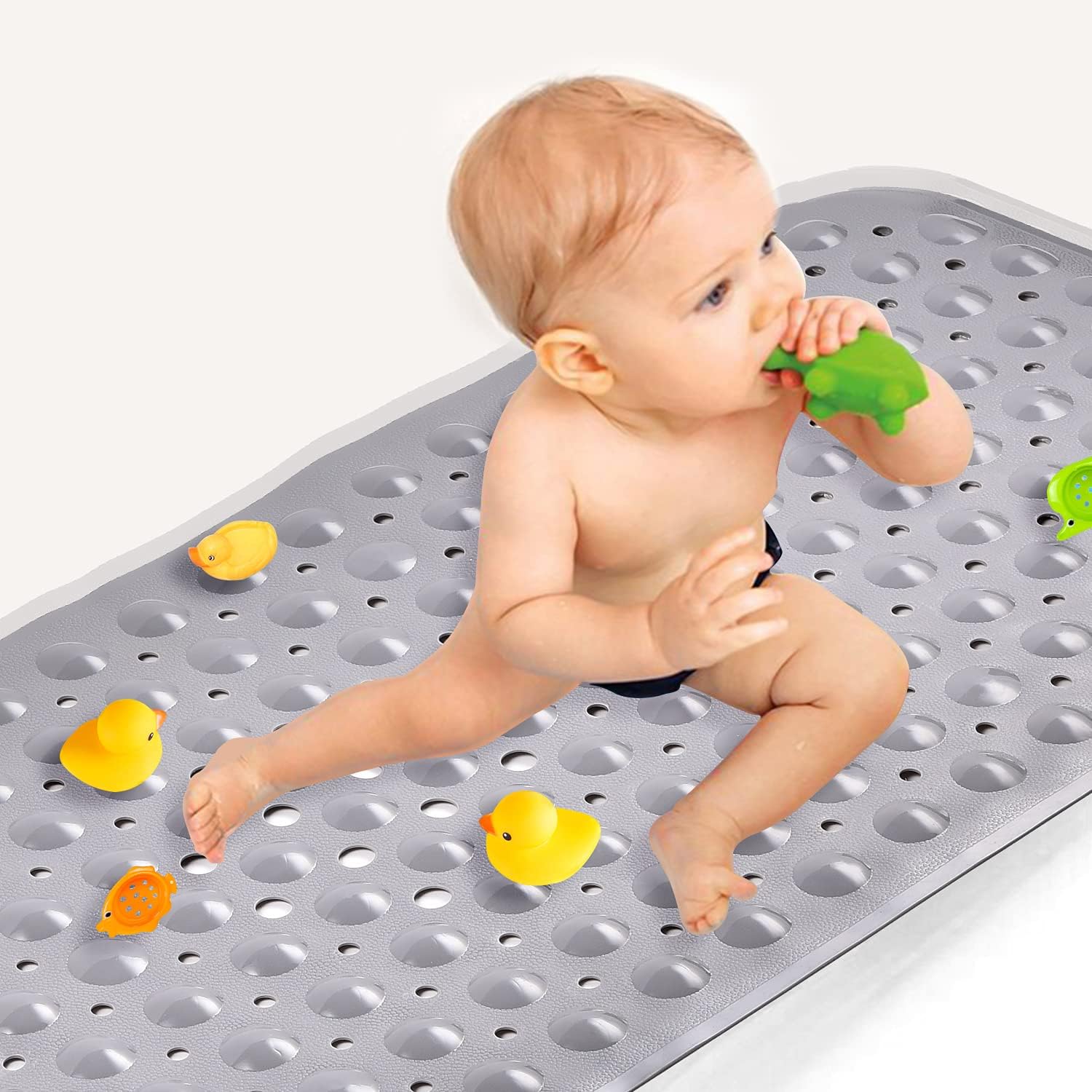
Baby Bath Mat for Tub
Non Slip Extra Long Cover Bathtub Mat with 200 Big Suction Cups for Toddler Infant Kids 40 X 16 Inch
Common questions
When should I start baby-proofing?+
By 5-6 months, before your baby starts crawling. Most babies crawl between 6-10 months, and they move fast once they start. Don't wait for the first close call.
Do I need to baby-proof if I'm always watching my baby?+
Yes. You will look away. You will answer the door, go to the bathroom, or check your phone. Baby-proofing protects your child in the seconds you're not watching, which happen every day.
What's the most important thing to do first?+
Anchor furniture and TVs. Tip-overs are among the most serious and preventable injuries. After that: outlet covers, cabinet locks, and a gate at the top of stairs.
Are pressure-mounted baby gates safe?+
At the bottom of stairs and in doorways, yes. At the top of stairs, no. Only hardware-mounted gates (screwed into the wall) are safe at the top of stairs.
What should I do if my baby swallows something?+
Call Poison Control immediately: 1-800-222-1222. If your baby swallowed a button battery, that's a medical emergency. Go to the ER. Do not wait.
Related articles
When to Worry About Milestones (and When Not To)
What the updated CDC milestones say about months 7-12, when missing one is normal variation, and the real red flags worth a doctor call.
Nutrition & FeedingStarting Solids: A Month-by-Month Guide
When to start solids, what to serve first, and the allergen research that changed everything.
Activities & PlayScreen-Free Play Ideas for 6-12 Month Olds
Play ideas that support development, cost almost nothing, and don't require a single app.
Sources
- CPSC, Childproofing Your Home (2024) — https://www.cpsc.gov/safety-education/safety-guides/kids-and-babies/Childproofing-Your-Home
- AAP, How to Keep Your Sleeping Baby Safe: Policy Explained (2022) — https://www.healthychildren.org/English/ages-stages/baby/sleep/Pages/a-parents-guide-to-safe-sleep.aspx
- CDC, Unintentional Injury Deaths in Children and Youth (2023) — https://stacks.cdc.gov/view/cdc/164032/cdc_164032_DS1.pdf
A quick note: This content is for informational purposes only and is not a substitute for professional medical advice. Always talk to your healthcare provider about any questions or concerns. Content based on guidance from the American Academy of Pediatrics (AAP), the World Health Organization (WHO), the Centers for Disease Control and Prevention (CDC), Mayo Clinic, and peer-reviewed medical literature. Learn how we create our content.