Week 31
Your baby is the size of a coconut
At 31 weeks, your baby has finished most major development per Mayo Clinic. From here, it's the weight-gain push. About three in five pregnant women carry lumbopelvic pain by the third trimester per a 2024 meta-analysis, and you're probably one of them. Nine weeks to go, give or take. Here's what week 31 actually looks like, plus the pelvic pain piece that often gets dismissed as just pregnancy.
Key takeaways
- At 31 weeks, your baby has finished most major development per Mayo Clinic. From here, the work is fat, weight, and lung maturation.
- Average third-trimester fetal weight gain is about 176.5 g per week (~6.2 oz), with a standard deviation of 29.1 g per Mongelli et al. (J Matern Fetal Neonatal Med, 2016). Variation is built into the model.
- About 63% of pregnant women experience lumbopelvic pain during pregnancy per Shanshan et al. (Acta Obstet Gynecol Scand, 2024). North America runs higher at 71%.
- Pelvic girdle pain has a point prevalence of about 20% in pregnancy and responds to treatment, per the European guidelines (Vleeming et al., 2008). It is not the same condition as low back pain, and a pelvic-floor PT can help.
Your baby is done building this week, and the weight-gain push starts now
Per Mayo Clinic, at 31 weeks your baby has finished most major development.
From here, the work shifts from construction to weight gain.
The rough size landmarks bracket this week. Per Mayo Clinic, at week 30 your baby is more than 10 1/2 inches (270 mm) crown-to-rump and weighs nearly 3 pounds (1,300 g). By week 32, that's about 11 inches (280 mm) and 3 3/4 pounds (1,700 g). You're in between.
Per Mongelli et al. (J Matern Fetal Neonatal Med, 2016), the mean fetal weight gain across the third trimester is 176.5 g per week, with a standard deviation of 29.1, based on 12,425 term singleton pregnancies.
Roughly 6.2 ounces a week, on average. Variation is part of the model.
Most of that weight is fat.
The fat layer under the skin is what makes a newborn look round and what regulates body temperature against ambient air after birth. The lungs continue maturing toward adequate surfactant levels by about week 32, as covered at week 29. The brain is still on its third-trimester growth ramp.
About three in five pregnant women have lumbopelvic pain in the third trimester, and pelvic girdle pain is treatable
If your back, hips, or pubic bone have been hurting for weeks, you're in the majority.
Per Shanshan et al. (Acta Obstetricia et Gynecologica Scandinavica, 2024), a meta-analysis of 38 studies and 21,533 pregnant participants, the pooled prevalence of lumbopelvic pain during pregnancy is 63% (95% CI: 57% to 69%). North America runs higher at 71%.
Not rare.
The piece that often gets missed is the difference between low back pain and pelvic girdle pain (PGP). Per the European guidelines (Vleeming et al., Eur Spine J, 2008), PGP has a point prevalence of about 20% in pregnancy and is a distinct condition. Pain often sits around the SI joints (low and posterior) or the pubic symphysis. It worsens with standing on one leg, climbing stairs, or rolling over in bed.
What helps:
- Side-sleeping with a pillow between your knees keeps the pelvis level overnight.
- A pregnancy support belt offloads the SI joints during walking and standing.
- Skip single-leg loading. Get dressed sitting down, and roll out of the car instead of stepping out.
- A pelvic-floor or perinatal-trained PT can address SI joint and symphysis pain directly.
Contact your provider right away if pelvic pain is severe enough that you can't bear weight, comes on suddenly with no clear trigger, or is paired with vaginal bleeding, regular contractions, fluid leakage, or a sustained drop in your baby's movement.
For dads
Here's your move:
Pre-register at the hospital this week. Most labor and delivery units have an online intake form that takes 15 minutes and saves an hour of paperwork during contractions. While you're at it, save the L&D direct line in your phone, not the main hospital number. The triage nurse picks up faster. The car seat goes in this weekend if it isn't already. Free installation checks are available at most local fire stations. Search '[your zip code] car seat inspection' and book the slot. Operational stuff. The kind nobody warns you to do nine weeks out, but a relief once it's done.
Real talk:
Pelvic pain is the one she has been quietly absorbing because it sounds like another generic third-trimester complaint. It isn't. About three in five pregnant women carry lumbopelvic pain right now per the 2024 meta-analysis, and the pelvic girdle subset is a clinically distinct condition with treatment. If she winces when she stands up, struggles getting in and out of the car, or asks you to help her roll over at night, that's PGP territory. Search for a pelvic-floor physical therapist in your area and book the consult yourself. Don't wait for her to ask. The treatment is real, and the pain doesn't have to be.
Common concerns
Is it normal for kicks to feel different now?+
Yes. As space gets tight, the big rolls and somersaults of earlier weeks shift toward distinct jabs, pokes, and pushes. What matters is the daily pattern. A sustained drop in movement once you know your baby's rhythm is the call your provider wants, not a change in style. The kick-count framing from week 28 still applies: 10 movements in two hours during your baby's typically active stretch.
Can I tell the difference between pelvic girdle pain and just back pain?+
Some, with practice. PGP usually sits low and posterior, around the SI joints (the dimples on your lower back) or right at the pubic symphysis. It worsens with single-leg loading, like climbing stairs or stepping out of a car. Low back pain sits higher and is often more bilateral and muscular. Either way, a pelvic-floor PT can sort it. The Vleeming European guidelines list specific provocation tests your PT will know.
My baby is still breech at 31 weeks. Should I be doing exercises now?+
Most providers don't formally assess fetal presentation until 36 0/7 weeks per ACOG, as covered at week 30. Plenty of space and time for a flip. If your provider has flagged a specific position concern, follow their guidance. Otherwise, Spinning Babies positions are a low-cost option some parents try, but the data is mixed. ECV around 37 weeks is the standard call if your baby is still breech then.
I noticed leaking from my breasts. Is that already colostrum?+
Probably, and it's normal. Colostrum production ramps in the third trimester, and some pregnant women start leaking small amounts in the last 8 to 10 weeks. It doesn't mean labor is close, and it isn't a sign of milk supply. A pair of nursing pads in the bra handles it. If you also have breast pain, redness, fever, or a one-sided lump, call your provider. Those are different signs.
Product picks for week 31
As an Amazon Associate, Cradlebug earns from qualifying purchases — at no extra cost to you. Learn more
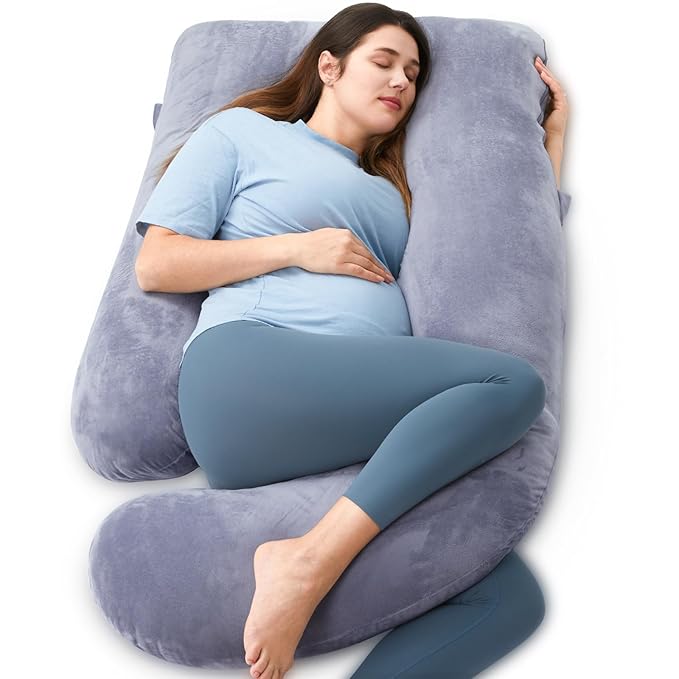
Momcozy Pregnancy Pillow, U-Shaped Full Body Maternity Pillow, 57 Inch
57-inch U-shape with a removable cover. Direct fit for the side-sleeping-with-a-pillow-between-knees recommendation in section 2.

Hiccapop Pregnancy Pillow Wedge for Belly Support
Memory foam wedge that doubles as a knee pillow at night and a back or belly prop during the day. Targeted to the single-pillow use case in section 2.
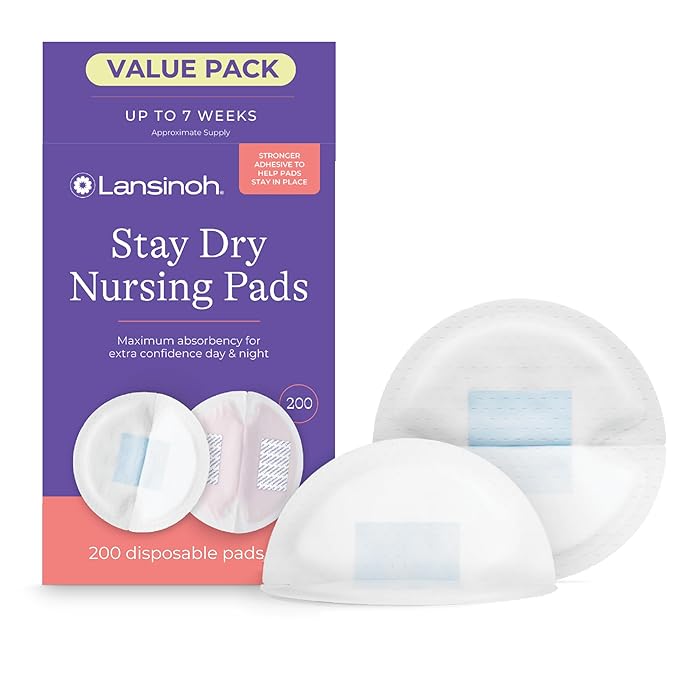
Lansinoh Stay Dry Disposable Nursing Pads, 200 Count
Value pack of the same disposable nursing pads, sized for late-pregnancy leakage into the postpartum stretch.
Sources
- Mayo Clinic, Fetal Development: The 3rd Trimester (March 2025) — https://www.mayoclinic.org/healthy-lifestyle/pregnancy-week-by-week/in-depth/fetal-development/art-20045997
- Mongelli M, Benzie R, Condous G. Average fetal weekly weight gain: a novel measure of fetal growth velocity. J Matern Fetal Neonatal Med (2016) — https://pubmed.ncbi.nlm.nih.gov/25714480/
- Shanshan H et al. Prevalence of lumbopelvic pain during pregnancy: a systematic review and meta-analysis. Acta Obstet Gynecol Scand (2024) — https://pubmed.ncbi.nlm.nih.gov/37997035/
- Vleeming A, Albert HB, Östgaard HC, Sturesson B, Stuge B. European guidelines for the diagnosis and treatment of pelvic girdle pain. Eur Spine J (2008) — https://pubmed.ncbi.nlm.nih.gov/18259783/
- ACOG, External Cephalic Version (Practice Bulletin No. 221, May 2020) — https://www.acog.org/clinical/clinical-guidance/practice-bulletin/articles/2020/05/external-cephalic-version
A quick note: This content is for informational purposes only and is not a substitute for professional medical advice. Always talk to your healthcare provider about any questions or concerns. Content based on guidance from the American College of Obstetricians and Gynecologists (ACOG), the American Academy of Pediatrics (AAP), Mayo Clinic, and peer-reviewed medical literature. Learn how we create our content.