Screen-Free Ways to Prepare for Baby Together
Screen-free pregnancy activities couples can do together to prepare before baby arrives.
6 min read
If you and your partner keep scrolling past the baby-prep list and telling yourselves you'll get to it, you're not alone. Research tracking couples across the transition to parenthood found roughly two-thirds experience a drop in relationship satisfaction in the first year after baby (Shapiro, Gottman, and Carrere, Journal of Family Psychology, 2000). Here are screen-free activities that do real work while the two of you still have quiet evenings and full attention to give each other.
Key takeaways
- Protect one phone-free dinner or walk a week. Research links this kind of partner involvement to better emotional wellbeing for both parents.
- Sign up for an in-person childbirth class together. A shared baseline matters more than watching videos separately.
- Write letters to your baby side by side. The sitting-together part matters more than the writing.
- The hardest couple conversations go better in motion, so walk them instead of sitting them out.
- Roughly two-thirds of couples see a dip in relationship satisfaction the first year after baby. Prep now is prevention, not paranoia.
The together-prep window closes faster than you think
Nobody tells you this part.
The last trimester feels slow from the inside and fast from the outside.
You have a finite number of uninterrupted evenings left, and they matter more than anything specific you cross off a checklist. Research on couple bonding during pregnancy links partner involvement to better emotional wellbeing for both parents and smoother bonding with the baby after birth (Vreeswijk et al., 2019). That's not a reason to panic. It's a reason to protect a few hours a week for each other without the TV on.
Start small. One dinner a week with both phones in a drawer before the first bite. No rule against talking about the baby, and no rule against talking about anything else.
Have the "what kind of parents do we want to be?" conversation
Before the sleep deprivation hits, it's easier to talk about what you actually want out of parenting. Sit down with a notebook between you and trade honest answers.
A few starter questions: - What's one thing your parents did that you want to keep? - What's one thing you want to do differently? - How do we handle it if we disagree in front of the baby? - How are we splitting night shifts in the first few weeks? - Who's our first call when something goes wrong?
These aren't gotcha questions.
They're rehearsals.
Writing your answers down means you can come back to them at 3 a.m. when the baby's screaming and neither of you can remember what you agreed. One couple's answers won't match another's, and that's the point.
Sign up for an in-person childbirth class, together
Here's where it gets surprising. You can learn the mechanics of labor from a YouTube video in forty minutes. That's not what the class is really for.
An in-person class puts you both in the same room, with the same information, asking the same questions at the same time. That shared baseline does real work. The Gottman Institute's "Bringing Baby Home" program, a research-backed workshop for expecting parents, has been associated with better co-parenting and more stable relationship satisfaction a year later compared with couples who skipped it (Shapiro and Gottman, 2005).
If a Gottman workshop isn't available where you live, a standard hospital birth class still does part of the job. The goal is one evening where the two of you are doing the same thing, not two people scrolling in parallel. Bring a snack. Sit next to each other. Ask the questions you're embarrassed to Google.
Write letters to your future baby, side by side
This one surprised us too. Sit shoulder-to-shoulder with a simple journal or a couple of index cards and write short letters to your baby. You don't show each other what you wrote. You just write.
What to include: - What you want your baby to know about their other parent - The song stuck in your head this week - What you're worried about - One hope that feels too big to say out loud
The point isn't the letters.
The point is forty-five minutes of sitting together with a pen, thinking about the same person you're both about to meet. Years later, you'll have a box of them. Before then, you'll have the night you wrote them.
Walk first, talk second
The hardest couple conversations go better in motion. Talking shoulder-to-shoulder instead of face-to-face lowers the stakes and makes harder things easier to say.
Make it routine. Thirty minutes a few evenings a week, no phones and no headphones. ACOG recommends at least 150 minutes of moderate exercise a week in uncomplicated pregnancies anyway (ACOG, 2020), so you're knocking out two things at once.
Topics that walk well: - Money changes after the baby - Extended family visits and how to set limits - What postpartum help looks like and who asks for it - The version of yourselves you want to be a year from now
If a conversation gets sticky, keep walking. The pace will carry you through. The last trimester has a finish line, and you don't have to cross it perfectly. You just have to cross it together.
For dads
Here's your move:
Book one thing this week, and put it on the shared calendar before you close this tab. A hospital birth class. A dinner reservation somewhere that isn't your couch. A Sunday walk together with both phones at home. Just one. The baby-prep industry wants you drowning in classes and checklists, but what your partner will remember a year from now is whether you showed up consistently. If you're the one with more flexibility at work right now, you're the one who plans it. Send the invite. Don't ask what they'd prefer. This is the week to lead.
Real talk:
Here's the quiet thing nobody says out loud. A lot of dads hit the third trimester feeling like a support act, and the activity gap is part of why. Your partner is doing something huge in their body. You're doing what, exactly? The answer: you're the other half of this kid's life, and the person your baby comes home to is going to be steadier if the two of you got steady together first. You don't need strong feelings about every baby-prep activity to show up for it. You just need to show up. The feelings catch up later, usually when you aren't looking. That's how this part works.
Product picks
As an Amazon Associate, Cradlebug earns from qualifying purchases — at no extra cost to you. Learn more

Better Together 100 Conversation Cards for Couples
Short deck you can finish in one sitting. Under $20 and a solid phone-free dinner companion.
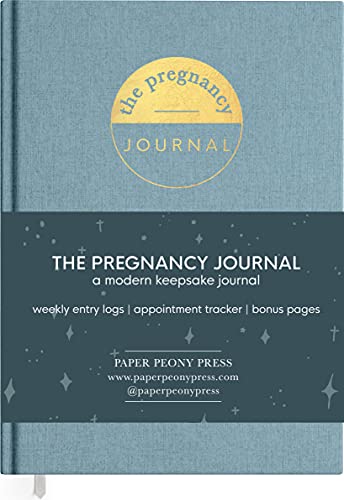
The Pregnancy Journal: Beautiful Organizer and Memory Book for Mom and Baby
Guided pregnancy journal with room for both partners to contribute week by week.
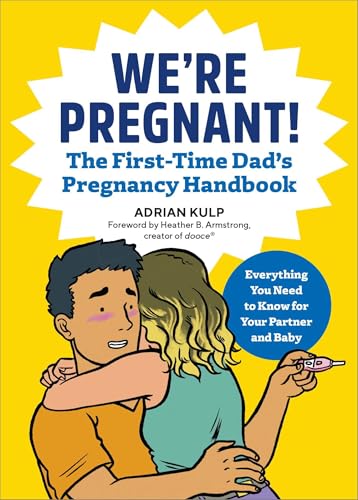
We're Pregnant! The First Time Dad's Pregnancy Handbook
Month-by-month handbook for partners. Fits the activity-by-activity approach in this article.
Common questions
How soon is too soon to take a childbirth class?+
Most hospital classes are timed for the third trimester, roughly weeks 28 to 34. Sign up early. Spots fill up fast, especially at smaller hospitals.
My partner isn't into this kind of activity stuff. What now?+
Start smaller than a journal or a class. Put both phones away for one dinner a week and see how that feels before adding anything else.
Does couples' prenatal bonding actually help the baby?+
Research links partner involvement during pregnancy to better maternal-infant bonding after birth and better emotional wellbeing for both parents (Vreeswijk et al., 2019). It isn't a guarantee, but it doesn't hurt.
We're both working full-time and exhausted. Do we really need more on the list?+
No. These activities are meant to replace screen time, not add to it. The goal is swapping a scroll for a conversation, not squeezing in more.
What if we fight when we try to talk about parenting stuff?+
Most couples do, at least once. A birth class or a therapist who does prenatal work can help. You don't need to be in crisis to book one.
Is it weird to write letters to a baby who isn't born yet?+
Not at all. It's a long tradition, and it has the side effect of slowing you both down. You don't have to share what you wrote.
Related articles
Hospital Bag Checklist for Mom and Dad
Everything both parents need, in three bags.
Exercise & MovementSafe Exercise by Trimester: A Complete Guide
ACOG recommends 150 minutes of moderate exercise per week throughout pregnancy. Here's exactly what's safe, what to skip, and how to adapt by trimester.
Sources
- Shapiro AF, Gottman JM, Carrere S. The baby and the marriage: identifying factors that buffer against decline in marital satisfaction after the first baby arrives. Journal of Family Psychology (2000). https://pubmed.ncbi.nlm.nih.gov/10740682/
- Vreeswijk CMJM, Rijk CHAM, Maas AJBM, van Bakel HJA. Couples' prenatal bonding to the fetus and the association with one's own and partner's emotional well-being and adult romantic attachment style. Journal of Reproductive and Infant Psychology (2019). https://pubmed.ncbi.nlm.nih.gov/31627088/
- Shapiro AF, Gottman JM. Effects on Marriage of a Psycho-Communicative-Educational Intervention With Couples Undergoing the Transition to Parenthood, Evaluation at 1-Year Post Intervention. Journal of Family Communication (2005). https://www.gottman.com/blog/new-research-study-confirms-bringing-baby-home-workshop-effectiveness/
- ACOG Committee Opinion No. 804: Physical Activity and Exercise During Pregnancy and the Postpartum Period (2020). https://www.acog.org/clinical/clinical-guidance/committee-opinion/articles/2020/04/physical-activity-and-exercise-during-pregnancy-and-the-postpartum-period
A quick note: This content is for informational purposes only and is not a substitute for professional medical advice. Always talk to your healthcare provider about any questions or concerns. Content based on guidance from the American College of Obstetricians and Gynecologists (ACOG), the American Academy of Pediatrics (AAP), Mayo Clinic, and peer-reviewed medical literature. Learn how we create our content.