Newborn Essentials: What You Actually Need (and What's Waste)
The real newborn essentials list, the stuff you can skip, and the sleeper hits nobody told you about.
5 min read
If you've spent an hour staring at a baby registry checklist wondering how a 7-pound human needs 87 products, you're not alone. Parents routinely overspend on newborn gear, and a surprising amount of it ends up in a closet by month 2. Here's what you actually need for the first three months, what's a waste of money, and the unglamorous items that secretly save your sanity.
Key takeaways
- Your newborn needs about 10 categories of stuff, not 50. A safe sleep space, a car seat, feeding supplies, diapers, clothes, and a few comfort items cover the first 3 months
- Skip the wipe warmer, the dedicated changing table, and newborn-sized shoes. You won't use them
- The AAP says nothing should be in the crib except a firm mattress and a fitted sheet. No bumpers, no blankets, no stuffed animals
- Buy less, buy later. You'll figure out what you actually need in the first week. Everything else can arrive in 24 hours
The actual essentials: what your newborn needs
Here's the real list. No fluff.
Safe sleep: A crib, bassinet, or play yard that meets CPSC standards, a firm mattress, and fitted sheets. That's it. The AAP is clear: nothing else goes in the sleep space (AAP, 2022). No bumpers, blankets, positioners, or stuffed animals.
Car seat: You can't leave the hospital without one. Get it installed before the due date. Many fire stations offer free checks.
Feeding: If breastfeeding: nursing bras, breast pads, a pump if returning to work, and bottles for pumped milk. If formula feeding: bottles, a bottle brush, and formula. Either way, burp cloths. Lots of them.
Diapers and wipes: Newborns go through 8-12 diapers a day. Stock up, but don't overbuy newborn size. Many babies outgrow it in weeks.
Clothes: 6-8 onesies and sleepers in 0-3 month size. Skip newborn size unless your baby is expected to be small. A few hats and one weather-appropriate outer layer.
What most parents buy and never use
This one surprised us too. The things that look essential in the store and end up in a donation pile:
- Wipe warmer. Sounds nice. Dries out wipes. Gets abandoned by week 3.
- Dedicated changing table. A changing pad on a dresser does the same job. Most parents end up changing the baby on the bed or floor.
- Newborn shoes. Your baby can't walk. They can barely keep socks on.
- Matching nursery set. Your baby doesn't know what color their wall is.
The common thread: if it solves a problem you don't actually have, it's marketing, not parenting.
The guilt trap of 'the best'
Here's what nobody says out loud: the baby gear industry makes money by making new parents anxious. Every product is "the best" or "essential" or "doctor-recommended." The subtext is always the same: if you don't buy this, you're not doing enough.
Your baby doesn't know what brand their onesie is. They don't care if the crib sheet matches the nursery theme. They need to be fed, warm, clean, safe, and held.
If you're on a budget, thrift stores and hand-me-downs cover most clothing and gear. The only items to buy new: car seat (for safety compliance), crib mattress (firm and flat), and anything that touches the baby's mouth.
The sleeper hits nobody told you about
These are the unsexy items that end up being indispensable:
- A white noise machine. Helps newborns sleep through household sounds. Worth every penny.
- Zip-up sleepers (not snap). You'll understand at 3 AM during the 400th diaper change. Snaps in the dark are torture.
- A good water bottle for you. You're dehydrated. You're always dehydrated. Get one with a straw you can open one-handed.
- Burp cloths in bulk. Not the decorative ones. The cheap, absorbent, buy-them-in-a-12-pack ones.
- A baby carrier or wrap. Your baby wants to be held constantly. Your arms will give out. A carrier lets you hold them and still eat lunch.
A spending guide by priority
Think in tiers, not checklists.
Buy before baby arrives: - Car seat (required for hospital discharge) - Safe sleep space with firm mattress - Diapers, wipes, and 0-3 month clothes - Feeding supplies for your plan
Buy in the first week based on what you actually need: - White noise machine (if your baby is noise-sensitive) - Swaddle or sleep sack - Baby carrier if you want one
Buy later or skip entirely: - Changing table, wipe warmer, bottle sterilizer, newborn shoes, matching nursery set
Most "essentials" can wait until you know what your baby needs. Every baby is different. The one who sleeps through a thunderstorm doesn't need a sound machine. The one who hates the swaddle doesn't need six of them. Buy less, buy later, and let the first week teach you.
For dads
Here's your move:
Install the car seat before the due date. Not the week of. Before. Watch a YouTube video, read the manual, then take it to a fire station or AAA for a free inspection. This is the one piece of gear that has to be right, and the hospital won't let you leave without it. While you're at it, pack the hospital bag and know where the going-home outfit is. When the day comes, you don't want to be the person googling car seat installation in the delivery room parking lot.
Real talk:
The registry process can feel like it's designed for someone else. The aesthetic nurseries, the curated lists, the $400 strollers. If that's not your thing, it doesn't mean you're less prepared. Your baby needs a safe place to sleep, something to eat, and two people who show up. Everything else is optional. If the gear shopping feels overwhelming, let your partner take the lead on the list and you take the lead on the car seat, the crib assembly, and the pediatrician research. Divide and conquer.
Product picks
As an Amazon Associate, Cradlebug earns from qualifying purchases — at no extra cost to you. Learn more


Lansinoh Anti-Colic Baby Bottles
Lansinoh Breastfeeding Bottles with NaturalWave Nipple, 5 Ounces, Pack of 3
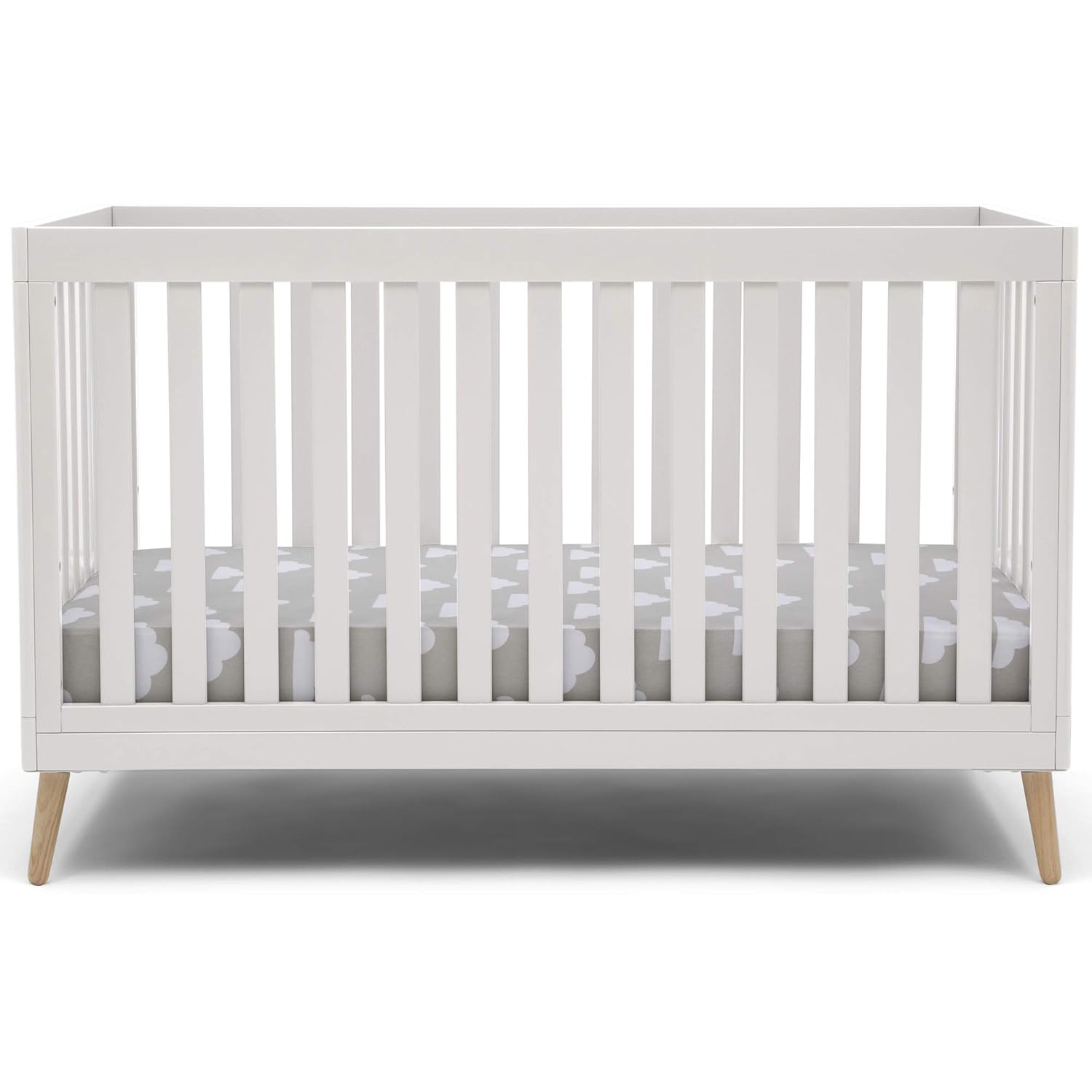
4-in-1 Convertible Baby Crib
Crib converts to a toddler bed, daybed and sofa Daybed/Sofa
Common questions
Do I really need a baby monitor?+
If your baby sleeps in your room for the first 6 months (per AAP), you may not need one right away. A basic audio or video monitor is helpful once they move to their own room. You don't need the $300 version.
How many newborn clothes should I buy?+
6-8 onesies or sleepers in 0-3 month size. Skip dedicated newborn size unless your baby is expected to be under 7 pounds. They outgrow it fast.
Is it safe to buy a used car seat?+
Only if you know the full history: no accidents, not expired, no recalls, all parts present. If any of those are uncertain, buy new. This is the one item not to gamble on.
Do I need a bottle warmer?+
Most babies are fine with room-temperature bottles. Running the bottle under warm water works. A dedicated warmer is convenient but not essential.
What's the one thing most parents wish they'd bought sooner?+
White noise machine. Cheap, effective, and gives you a sleep cue that travels with you.
Related articles
The Night Shift Schedule That Saved Our Sanity
How to split the night and actually sleep.
SleepBaby Sleep Without Sleep Training: What Works
What the research says about newborn sleep, what actually helps, and when it gets better.
Screen Time & TechHow to Use AI to Simplify Your Newborn Routine
How AI tools can help with feeds, sleep tracking, and the 3 AM panic without replacing your provider.
Sources
- AAP, Sleep-Related Infant Deaths: Updated 2022 Recommendations, Pediatrics (2022) — https://pubmed.ncbi.nlm.nih.gov/35921639/
- AAP, How to Keep Your Sleeping Baby Safe: Policy Explained (2022) — https://www.healthychildren.org/English/ages-stages/baby/sleep/Pages/a-parents-guide-to-safe-sleep.aspx
- CPSC, Safe Sleep — https://www.cpsc.gov/SafeSleep
A quick note: This content is for informational purposes only and is not a substitute for professional medical advice. Always talk to your healthcare provider about any questions or concerns. Content based on guidance from the American Academy of Pediatrics (AAP), the World Health Organization (WHO), the Centers for Disease Control and Prevention (CDC), Mayo Clinic, and peer-reviewed medical literature. Learn how we create our content.